What a customer experiences
is shaped by what
they never see.
For most of my career I worked on the part of an organisation people can see: the products, journeys and experiences. Working inside organisations showed me that the visible experience is often only the last layer of a much larger system. That system is what I work on now.
- A customer never sees the organisation. They experience what it decides.
- Friction is rarely created where it is felt.
- The more useful question is why the organisation creates that experience at all.
Customers never see the organisation.
They feel what it has set up.
The organisation chart
Customers never see it. They experience the decisions that were made because of it.
Internal processes
Invisible, until something takes too long. Then they are felt directly.
Technology systems
Also unseen. Their limitations are experienced every time someone uses them.
We can redesign the journey. Or we can understand why the organisation is creating that journey in the first place.
Where the customer struggles
is rarely where the friction begins.
Take a customer journey. The usual response is to look at where the customer struggles and fix that experience. But what if the friction is being created by three different teams, each working towards a different priority?
The second question leads somewhere different. It moves beyond the experience, towards how the organisation is set up, and then towards systems thinking.
Everyone holds a different
part of the truth.
I see this most clearly when people from across an organisation sit in the same conversation: customer-facing work, operations, technology, finance and leadership. Something shifts. Each person describes the same situation from where they stand.
What looks like an efficiency problem may be created by the way teams are measured.
What looks like a technology limitation may be a policy decision.
What looks like a customer problem to one person may be an operational constraint to another.
From what people see
to what shapes it.
I began with what people could see. I became more interested in what people experience. Now I work on what sits behind the experience: the organisation, and the system around it. These are not rungs on a ladder. Each layer sits inside the next, and each shapes the one before it.
The visible
What people can see.
Experience
What people go through.
Organisation
How it decides and works.
System
How the parts shape one another.
Beyond that sits a larger question I keep returning to: how do we design better systems for people to live and work in? It is a personal curiosity, not a service.
These are not the problems
of any one function.
They are about how the whole system works.
How organisations make decisions
How teams work together
How processes influence behaviour
How technology changes the way work happens
How one decision creates consequences somewhere else
As making gets easier,
the deeper questions matter more.
Technology is making the act of creating things much easier. Ideas, visuals, prototypes, content and even solutions can be produced far faster than before. That makes the deeper questions more important.
These are not questions that belong to one discipline. They are questions about people, business and systems.
Understand the system first. Then decide what to change.
Guruprasad (Avyaktaha) · Founder, Stratants
SAGE is what
that shift became.
I kept meeting the same pattern. A problem would be described as a customer issue, a technology limitation or an efficiency gap, and the cause sat one layer deeper: in how decisions were made, how teams were measured, or how one part of the organisation affected another. Rarely had anyone been asked to read the whole system before acting on one part of it.
SAGE is the practice I built around that question. Understand the system first. Then leadership chooses what to change, rather than receiving a list of ideas to implement.
First shared as a reflection on LinkedIn, August 2026.
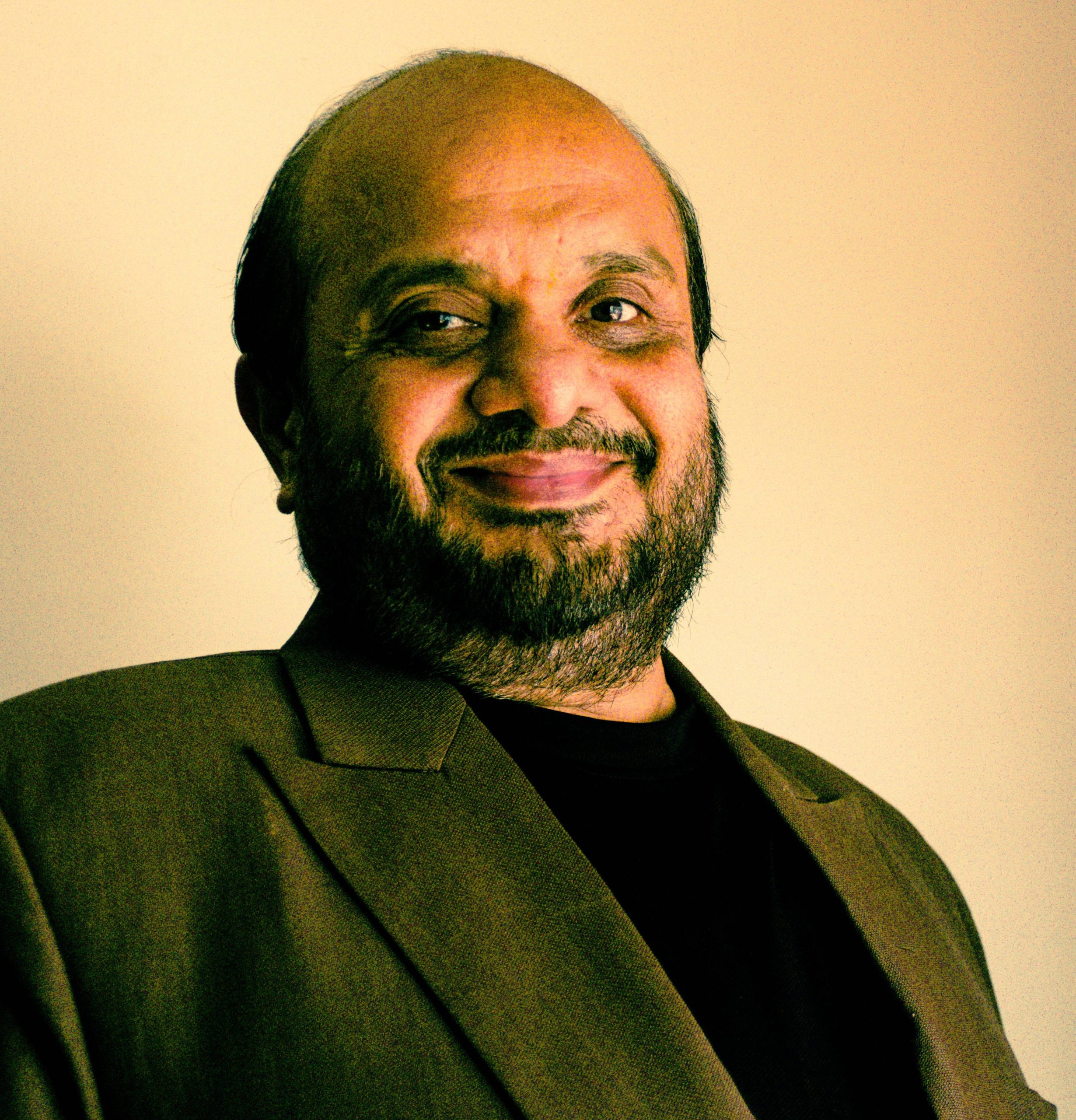 Guruprasad (Avyaktaha)
Founder, Stratants
Behind every visible problem sits a system.
Understand it before deciding what to change.
One conversation. No pitch, no proposal, no commitment implied. Guruprasad (Avyaktaha) will tell you plainly whether SAGE makes sense for your situation.
Start a conversation